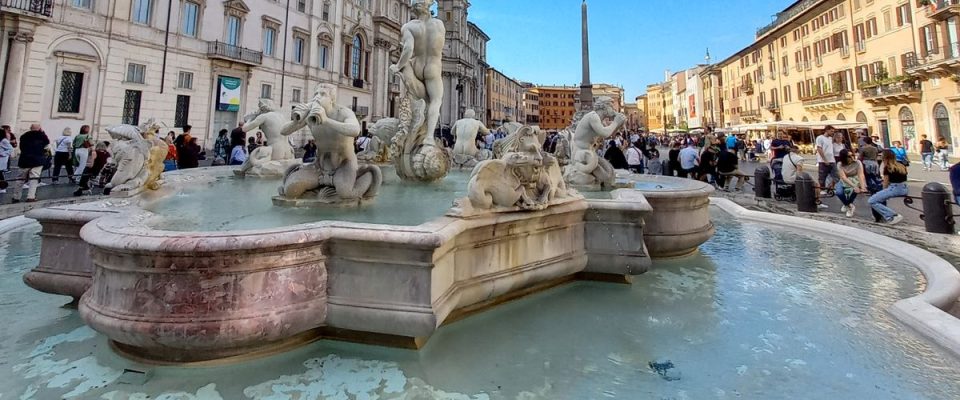
Rome fountains and squares are famous for their beauty and their artistic and architectural features: let’s discover the best ones together!
Walking around the capital allows you to explore picturesque alleys, hidden corners and stop in lively squares, where you can observe city life. The fountains, with the sound of flowing water, add a touch of tranquility and freshness, creating a contrast with the vibrant energy of the place that hosts them.
Rome is famous for its magnificent fountains, including the Trevi Fountain, one of the biggest in Italy. It is known for its spectacular appearance and the tradition of flipping a coin to ensure return to the city. Squares, such as Piazza Navona and Piazza di Spagna and their fountains are architectural jewels and perfect places to relax.
Here below the skip the line tickets for a beautiful experience to discover more about their origin and visit their undergrounds!
Trevi: one the most beautiful fountains in Rome
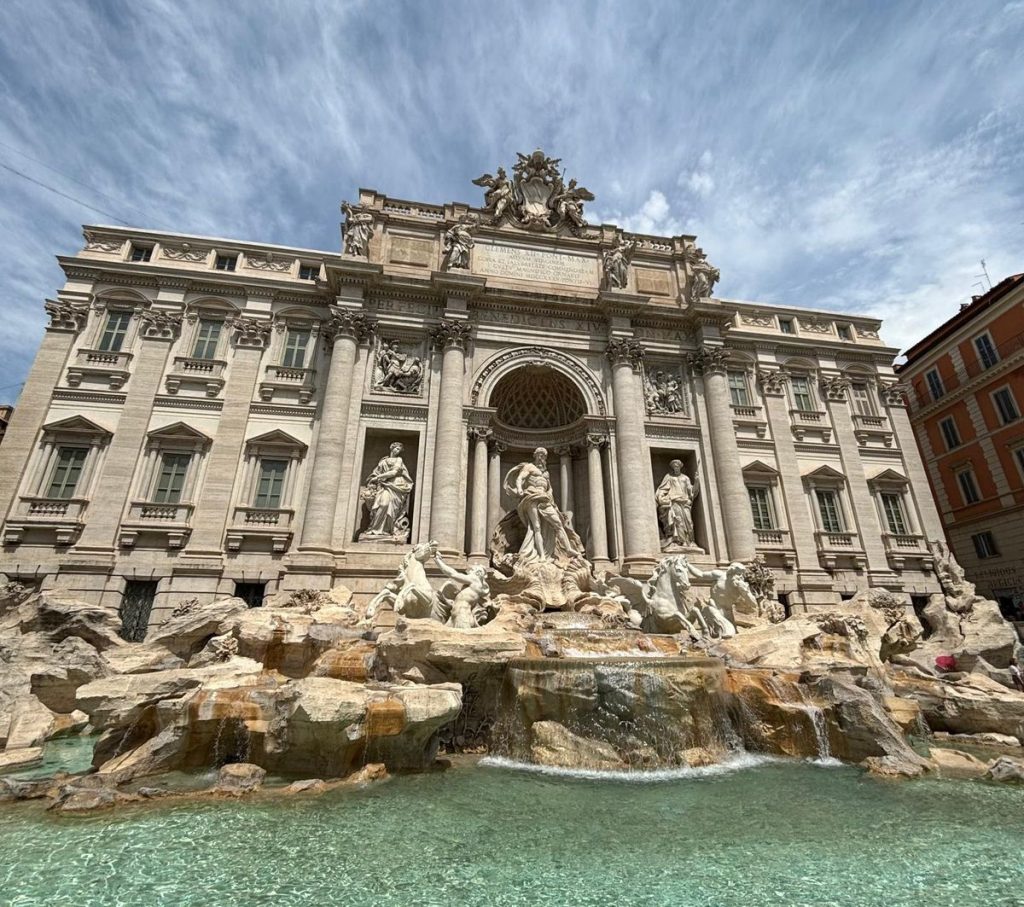
Trevi Fountain is the most beautiful fountain in Rome. It was built in the 18th century where an ancient source once stood. Among imposing statues and elaborate decorations is the masterpiece of Italian Baroque par excellence. Do you remembere the movie “La Dolce Vita”? It was its film set! Today it represents a scenic place where you can stop and throw a coin for good luck.
While on the surface you can enjoy the beauty and energy of one of the most iconic squares in the world, the beauty of the Trevi Fountain is not limited to this. The underground aqueduct that is located in its neighborhood offers a unique opportunity to explore the roots of the city. Visiting it is an experience that combines ancient history with the liveliness of the present, making the place a perfect symbol of the essence of Rome. Curious to visit its underground and the remains of an imperial Domus?
Four Rivers Fountain: in the iconic Piazza Navona
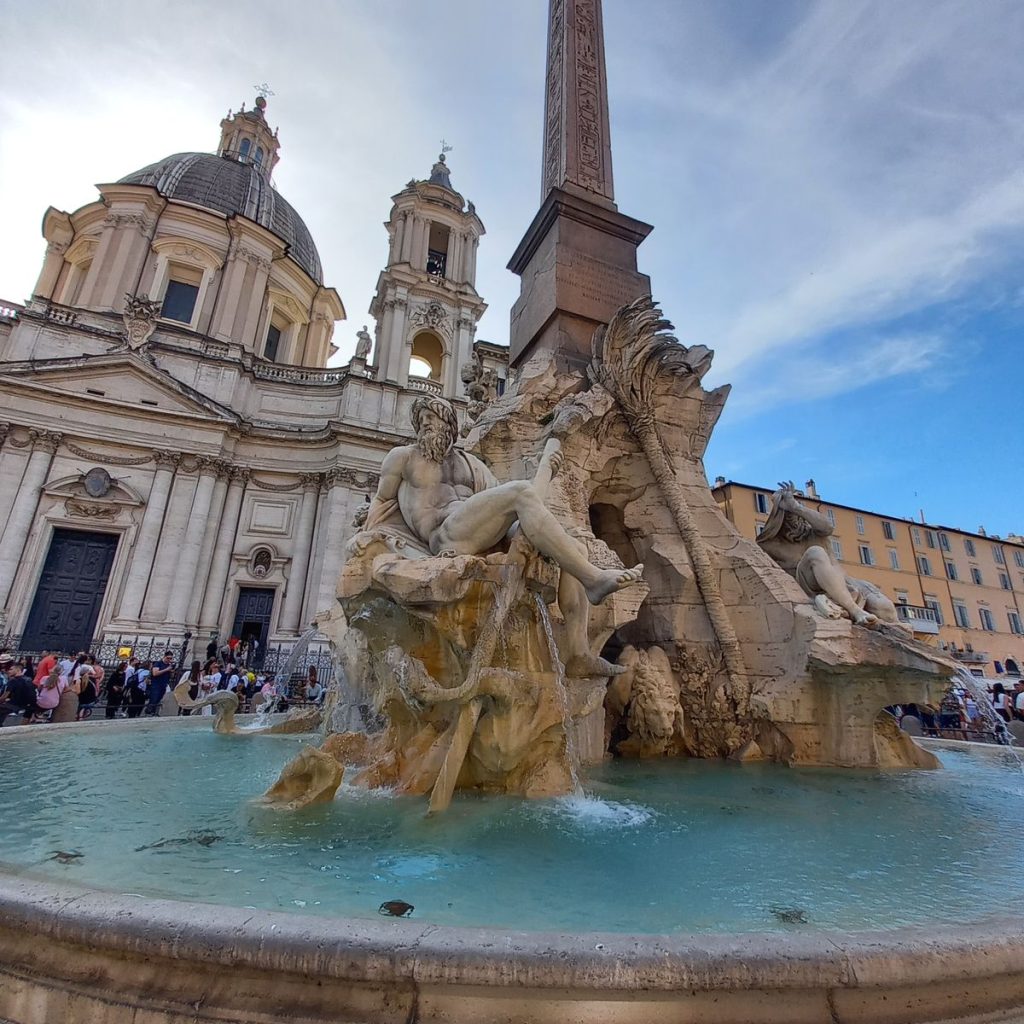
Located in Piazza Navona, the Four Rivers Fountain is one of the best fountains in Rome. Gian Lorenzo Bernini designed it representing the main rivers of the four continents known at the time (Nile, Danube, Ganges and Rio de la Plata). Its dynamic and lifelike sculptures are a perfect example of Baroque style. But the square is not only spectacular on the surface, its underground also hides treasures and tells a fascinating story that dates back to Ancient Rome.
Piazza Navona stands on what was once the ancient Stadium of Domitian built in 86 AD. C. for athletic sports and horse races. The square maintains the elliptical shape of the old stadium. In the 17th century, it was transformed into a splendid baroque space, with elegant buildings and monuments decorating it.
Visit the beautiful underground and travel back in time!
Barcaccia Fountain in Piazza di Spagna: on of the best squares in Rome
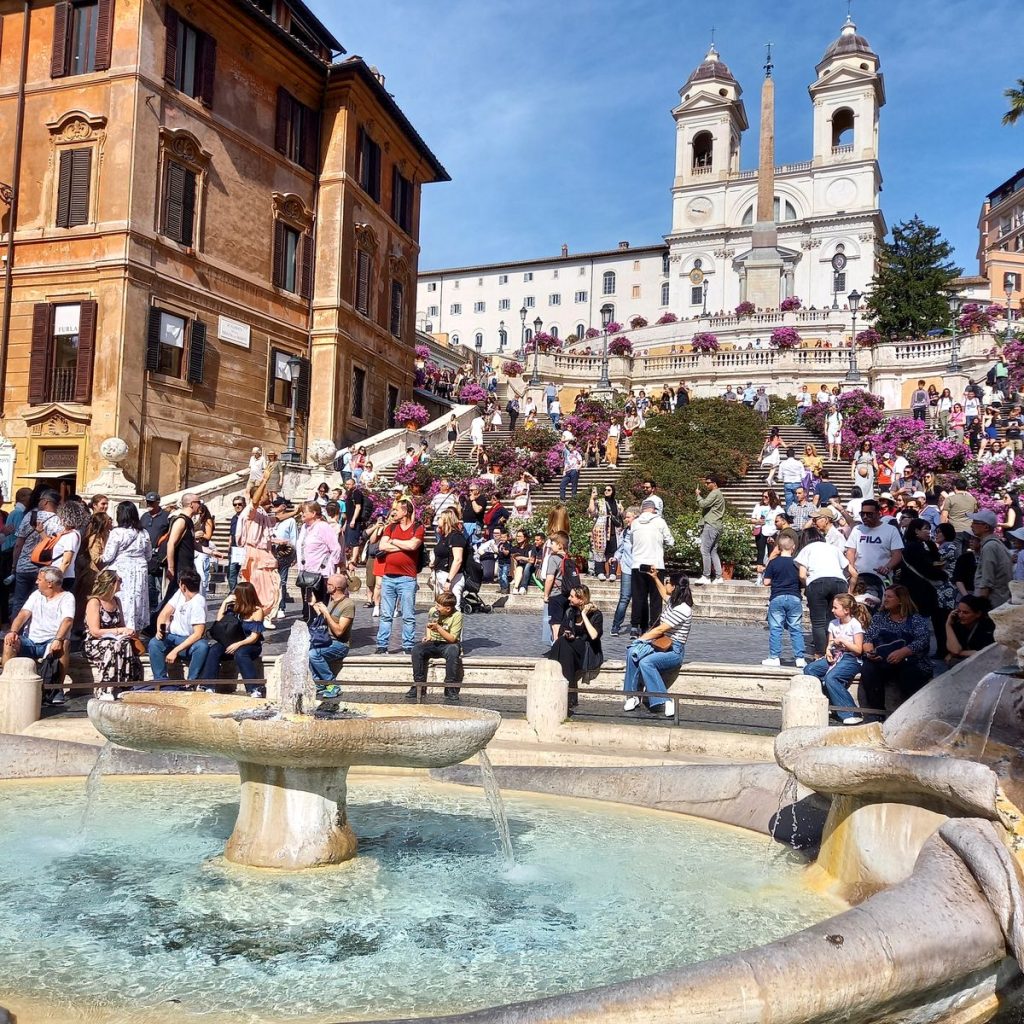
Among the best attractions to see Piazza di Spagna is certainly the “living room of Rome”. The iconic square which contains within it a beautiful urban panorama. It hosts the wonderful Spanish Steps. The Staircase of Trinità dei Monti which leads to the church of the same name. Built between 1723 and 1725, the staircase is composed of 135 steps that wind in a sinuous and scenographic design. Gian Lorenzo and Pietro Bernini designed, in the 17th century, the beautiful Barcaccia Fountain that lies at the foot of the staircase.
Today the square with its famous stairs and fountain is an iconic place. A mandatory stop for anyone visiting the capital to take a selfie on the steps!
Do you want to find out more about its fountain? Treat yourself to a walking tour of the best squares and fountains in Rome.
Vicus Caprarius: the City of Water
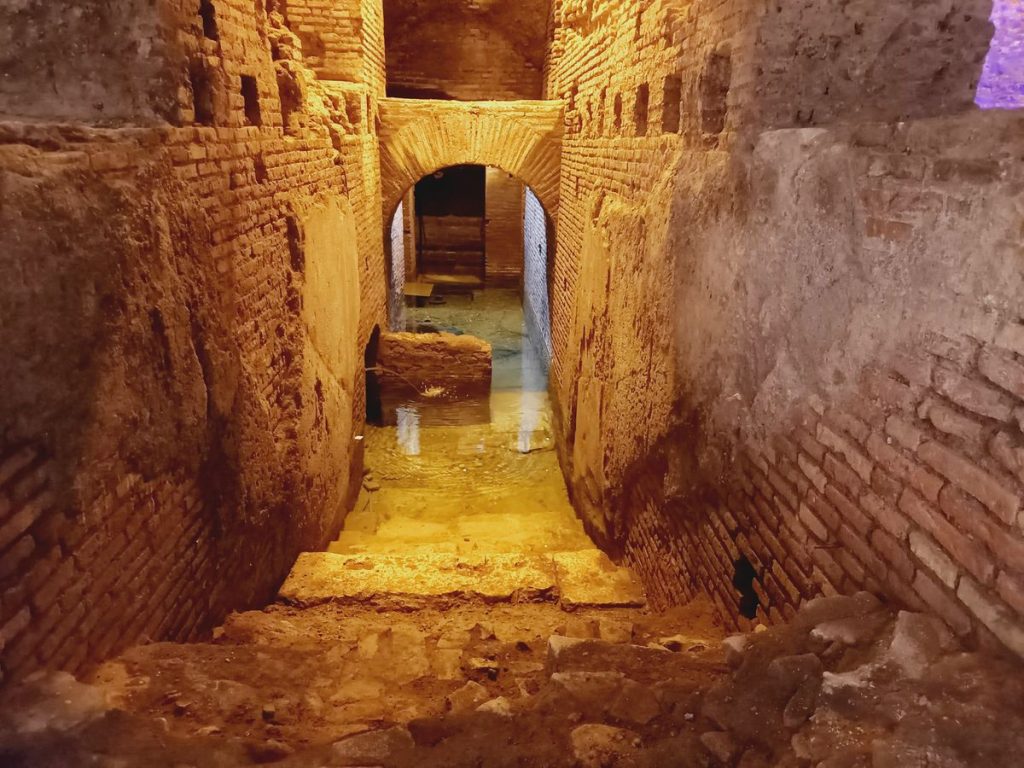
Also known as “The City of Water”, it is a fascinating underground archaeological site located in the heart of Rome, near the famous Trevi Fountain, one of the most majestic fountains in Rome. This place offers a unique experience, allowing visitors to explore the ruins of an ancient Roman insula and discover how water played a central role in antiquity. The site was part of a Roman residential complex dating back to between the 1st and 4th centuries AD.
It is crossed by the waters of the Virgo Aqueduct (Aqua Virgo), one of the oldest Roman aqueducts, which still feeds the Trevi Fountain today. During the visit, it is possible to see the water flowing through ancient cisterns and canals. The place is relatively small, but its intimacy allows visitors to feel directly connected with the history of Rome!